
HeartBrain -Coherence Techniques
From a scientific perspective, heart–brain coherence exercises aren’t just “feel-good” activities – they physically help synchronize the nervous system and brain. This leads to calmer emotions, clearer thinking, and a body that’s not in constant stress mode. By teaching kids how to shift into this state, we give them a tool to improve their own mood and mental performance on demand.
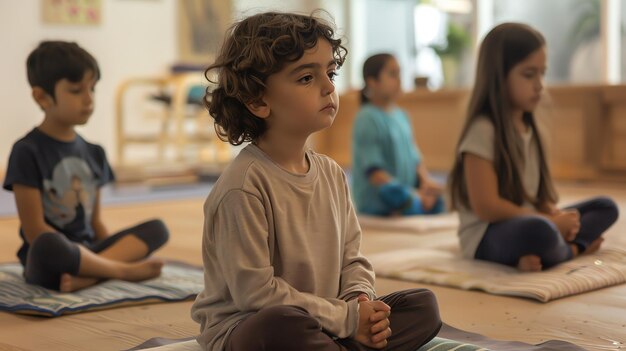
Heart–Brain Coherence Techniques for Kids & Teens: A Classroom Guide
Heart–brain coherence is a state where the heart and brain work in sync, leading to calm focus and emotional balance. In simple terms, it means our heart rhythms and brain waves are “tuned” to each other, helping us feel more calm, attentive, and in control. Teaching coherence techniques in schools can improve students’ stress management, concentration, and social-emotional skills. This guide blends science, breathing exercises, and mindful “heart-focused” activities that teachers can use with children and teens. We’ll cover the science of how coherent heart rhythms affect the nervous system and brain, beginner-friendly breathing techniques for the classroom, advanced practices from the HeartMath Institute (like Quick Coherence®, Freeze-Frame®, and Heart Lock-In®) explained in kid-friendly language, and even some heart-centered perspectives on intuition, gratitude, and inner calm. Each section provides practical steps and age-appropriate variations, so educators can help students of all ages find their calm center.
Scientific Foundations: How Heart Coherence Helps the Brain and Body
Scientific research shows a strong link between our heart’s rhythm and our brain’s performance. When we are stressed or upset, our heart rhythm becomes jagged and irregular, which signals the brain to stay in “fight or flight” mode. When we breathe slowly and generate positive feelings, our heart rhythm becomes smooth and patterned – a state scientists call heart coherence. In coherence, the heart and brain communicate efficiently through the nervous system, leading to a healthier emotional and cognitive state. Here are the key ways heart coherence affects children’s brains and bodies:
Balances the Nervous System: Slow, steady heart rhythms activate the calming branch of the autonomic nervous system (the vagus nerve), reducing the “fight-or-flight” stress response. Studies show that practicing heart coherence techniques increases parasympathetic activity and even lowers stress hormones and blood pressure . In short, coherence breathing helps kids physically relax, which can mean fewer jitters and tummy aches from anxiety.
Improves Brain Function and Focus: The heart sends signals to brain centers involved in emotion and attention (like the amygdala and prefrontal cortex). In a coherent state, these signals help the brain work better. Research has found that positive heart rhythms actually facilitate higher cognitive functions, meaning improved attention, reaction time, and problem-solving. For example, one study of middle school students showed significant gains in short- and long-term memory and the ability to focus after they learned coherence-building techniques . A calm heart can lead to a sharper mind in the classroom.
Enhances Emotional Regulation: Coherence is closely tied to emotional stability. When the heart is in a smooth rhythm, it “signals” the brain that it’s safe and okay to relax. This makes it easier for students to manage big feelings. In fact, inducing positive emotions (like gratitude or care) not only creates coherent heart patterns but also creates emotional stability and states of calm in the body. Over time, practicing these techniques can reset a child’s emotional “baseline” to be more balanced – meaning they return to calm more quickly after upsets instead of getting stuck in bad moods.
Boosts Cognitive Performance: A calm, coherent state is sometimes called the “optimal learning state”. In coherence, children are both relaxed and alert – the ideal condition for learning new material or performing well on tests. HeartMath training programs in schools have reported improvements in grades, attendance, and behavior as students learn to self-regulate through heart coherence. Teachers often notice that after a short coherence or breathing exercise, the class is more focused and students think more clearly. Even challenging students (like those with ADHD) have shown better behavior and attention when practicing heart-focused breathing techniques .
Bottom line: From a scientific perspective, heart–brain coherence exercises aren’t just “feel-good” activities – they physically help synchronize the nervous system and brain. This leads to calmer emotions, clearer thinking, and a body that’s not in constant stress mode. By teaching kids how to shift into this state, we give them a tool to improve their own mood and mental performance on demand.
Beginner Techniques: Coherence Breathing & Emotional Awareness
For children and younger teens, we start with simple techniques that introduce the idea of heart–brain coherence in an easy, playful way. The goal is to practice short breathing exercises that quickly calm the body and to build awareness of emotions by naming and shifting them. These beginner techniques can be done as a whole class (e.g. at the start of the day or after lunch) or individually whenever a student needs a quick reset. The key is to keep it simple and make it a positive experience. Below are a few beginner-friendly coherence practices:
5-Second Heart Breathing (Calm Heart Rhythm)
One of the simplest coherence techniques is a breathing pattern of 5 seconds inhale, 5 seconds exhale. This creates a steady rhythm (about 6 breaths per minute) known to synchronize heart and brain activity. We can teach kids that this is a “heart calming breath.” Here’s how to do it:
Sit Comfortably and Focus on Your Heart: Have students sit up straight, feet on the floor. They can place a hand on the center of their chest (over the heart) if they like. Ask them to gently focus their attention on their heart area – as if they’re breathing from the heart. This focus helps shift their mind away from racing thoughts.
Slowly Inhale for 5 Seconds: Guide them to breathe in slowly and deeply through the nose while you count to 5 (silently or with a gentle count: “inhale 1…2…3…4…5”). They should imagine filling their chest or even “heart” with air.
Slowly Exhale for 5 Seconds: Next, they breathe out for 5 seconds (“exhale 1…2…3…4…5”). Encourage them to make the exhale smooth and controlled. You can count aloud at first until they get the pace.
Repeat for 1–3 Minutes: Continue the 5-second inhale/exhale cycle. This paced breathing quickly brings more coherence to the heart’s rhythm. After about a minute, many students will start to feel more relaxed or centered. Even just 3 of these slow breaths can help in a pinch.
Tips: Young children may prefer a visual aid – for example, have them imagine a balloon in their chest inflating on the inhale and deflating on the exhale, or use a Hoberman sphere (breathing ball) that expands and contracts on a 5-second count. You can also play soft music at ~60 beats per minute to guide the rhythm. Explain to students that this breathing sends a signal to their brain that they are safe, which lets their brain shift out of stress and into focus mode. It’s a handy tool before a test, after recess, or anytime they need to reset. Research shows that instructing people to breathe slower and deeper at a comfortable rhythm naturally increases their heart coherence and emotional stability.
“Quick Reset” Heart Breaths
This is a mini-exercise to use in the moment when a student (or the whole class) feels frazzled or upset. It’s essentially a shortened version of the heart breathing above – perfect for a quick classroom break or transition. The steps are: Pause, Breathe, and Reset. For example, if the class just came in from an energetic recess, you might say: “Let’s all take a quick heart breath to reset. Everyone put one hand on your heart. Inhale slowly... and exhale slowly.” Take 2–3 of these breaths together. Even a single minute of heart-focused breathing can significantly reduce stress and bring students back to center. Students can also use a “quick coherence break” like this on their own: before an oral presentation, during a test if they feel anxious, or whenever they notice emotions running high. By routinely practicing these quick resets, kids learn that they have the power to change their mood or energy with just a few breaths. It’s like giving them a mental “pause” button that they can press anytime.
Name and Tame the Emotion (Notice & Ease Technique)
Emotional awareness is an important part of coherence. We want children to recognize how they feel and learn that naming a feeling can help it shrink. A simple classroom practice is the “notice and ease” technique (also known as “name it to tame it” in psychology). Here’s how it works:
Notice the Feeling: Encourage students to check in with their body and mood. For young kids, you might use a metaphor like “weather report” (sunny, cloudy, stormy) or have an emotions chart. Older students can simply close their eyes for a moment and ask themselves, “What am I feeling right now?”
Name It Out Loud or Silently: If appropriate, do a go-around where each student says one word for how they feel (“tired”, “anxious”, “excited”, “sad”, etc.), or have them write it down. The act of naming the emotion helps the brain’s emotional centers calm down. In fact, acknowledging an unwanted feeling makes it easier to neutralise – it’s the first step in releasing it.
Breathe and Ease it Out: Now lead the class in a few slow heart breaths (as above). As they exhale, tell them to imagine the difficult feeling melting away or blowing out with the breath. They might also imagine breathing in a positive color or light. The HeartMath Institute notes that when we name feelings like anxiety or anger, it “removes the intensity” of those emotions and helps ease them out, making room for more positive feelings. After a minute of breathing, ask students to notice if anything has changed – often they will feel at least a bit lighter or more centered.
For instance, a student upset about a bad grade might think “I feel disappointed”, then do coherence breathing. By identifying it, they’ve separated themselves from the emotion, and the breathing then further calms the body. This technique teaches kids that all feelings are okay, and that they have tools like breathing and awareness to manage those feelings. It builds emotional intelligence alongside physiological coherence.
Advanced Heart–Brain Coherence Techniques (HeartMath Methods)
Once students have practiced basic breathing and can calm themselves for a minute or two, you can introduce more structured techniques from the HeartMath Institute. These evidence-based methods include Quick Coherence®, Freeze-Frame®, and Heart Lock-In®. They involve additional steps like generating positive emotions or intuitive listening to the “heart’s wisdom.” We’ve adapted each technique into child-friendly language. These can be taught in short segments over a series of lessons or used in special workshops for social-emotional learning. Generally, Quick Coherence is simple enough for younger kids (and great for teens), Freeze-Frame is suited for older elementary through teens (especially for problem-solving or conflict situations), and Heart Lock-In can be a group bonding activity or a personal reflective practice for any age (upper elementary and up, with guidance). Let’s explore each one:
Quick Coherence®: Getting in Sync in 3 Steps
Quick Coherence is a signature HeartMath technique that helps you shift into a coherent state in about one minute. It’s like a fast-track to the calm, focused feeling we get after several minutes of meditation – useful anytime you need to manage stress or “be your best.” The official Quick Coherence technique has three simple steps (Heart Focus, Heart Breathing, Heart Feeling) that students can use with eyes open or closed. Here’s how to explain it:
Heart Focus – Put your attention on your heart area. You can close your eyes if it helps. Imagine all of your attention moving to the center of your chest, where your heart is. (Sometimes I tell kids “put your mind on your heart, like you’re giving your heart a little hug with your focus.”) This step helps quiet the mind and bring awareness inward.
Heart Breathing – As you focus on your heart, start breathing a little slower and deeper than normal. Inhale gently and exhale gently, finding a comfortable, slow rhythm (about 5 seconds in, 5 seconds out, as we practiced). Imagine the breath is flowing in and out of your heart area. Do this for around 30 seconds to a minute, until you feel yourself starting to relax. Your heart and brain are now beginning to sync up.
Heart Feeling – Now make a sincere attempt to feel a positive, renewing emotions. The easiest one is appreciation or gratitude. Think about someone you love (a parent, friend, or even a pet) or a happy memory, or imagine something you’re grateful for. Try to re-experience that warm, caring feeling in your heart. If it helps, put a gentle smile on your face. Sustain this feeling for as long as you can, even if only for 15–30 seconds at first. This positive heart feeling is what really increases the coherence in your heart rhythms.
That’s it – three steps to quick coherence! When students practice this, they usually report feeling calmer, more open, and “in tune” afterward. It’s normal if it feels a bit awkward at first, but with practice it becomes a natural skill. Nobody around needs to know you’re doing it – a teenager can do Quick Coherence silently during a stressful exam or before a big game and “no one will even know” they’re using a technique . The key is to practice it frequently in everyday situations so that in challenging moments it’s easy to slip into coherence. Teachers can encourage students to use Quick Coherence at the start of class (to get everyone focused) or when tempers flare. By focusing the heart, breathing slowly, and activating gratitude, we essentially send a signal to the brain telling it “all is well,” which replaces chaos with clarity. HeartMath research indicates that this kind of heart-focused breathing with positive feeling quickly balances one’s emotional state and can stop draining feelings like frustration or anxiety
Freeze-Frame®: Pause, Shift, and Find a Solution
Freeze-Frame is a technique to use when facing a problem, tough decision, or emotional challenge. The name comes from the idea of “freezing” the swirling thoughts or mental movie in that stressful moment – like pressing pause – so you can step back and get a clearer picture. In other words, when you’re upset or confused, you freeze the frame, shift into a coherent heart state, and ask your heart for intuitive guidance on what to do. This method is great for older children and teens when dealing with conflicts, test anxiety, or any moment they feel stuck. Many school programs teach Freeze-Frame because it reduces emotional chaos and improves decision-making under stress.. Here’s how to guide students through the five steps of Freeze-Frame (we can simplify the wording for kids):
Acknowledge the issue and your feelings (Press ‘Pause’): First, notice what’s bothering you and how you feel about it. Say to yourself what the problem is (e.g., “I’m really mad at my friend,” or “I’m afraid of failing this test”). It’s okay to have those feelings. By acknowledging the problem and your current emotion, you’ve effectively hit the mental “pause” button. Everything is frozen for a moment so you can take a step back instead of reacting automatically.
Heart-Focused Breathing: Now, shift your attention to your heart and begin breathing slowly and deeply (just like in Quick Coherence). Imagine the breath flowing in and out of your heart or chest area, and try to breathe a little slower and deeper than usual. Find a comfortable rhythm – you are calming your body and clearing your mind. This step is crucial: as you breathe, you are literally sending signals to your brain that reduce the stress response and open your mind to new solutions.
Activate a Positive Feeling: While continuing the heart breathing, make a sincere effort to feel a positive, regenerative emotion. For instance, think of someone you care about, recall a fun experience, or just remember the feeling of appreciation. You might even say a simple phrase to yourself, like “I appreciate the help I got yesterday” or “I’m grateful for my dog” – anything that genuinely lifts your mood a bit. This helps clear out the intense negative charge around the problem. You’re basically shifting your inner state from frustration or worry to one that’s more balanced and positive.
Ask Your Heart for Guidance: Now that you’re in a calmer, more coherent state, ask yourself (your heart) a question: for example, “What’s a better way to handle this?” or “What’s an attitude or action that would help me solve this?” . You can also ask, “How can I see this situation differently so it’s not so upsetting?”. It’s important to sincerely ask and then remain quiet and open. This isn’t about thinking with your head; it’s about listening to your heart/intuition after you ask the question.
Listen and Observe: Take a moment to quietly observe any change in how you feel or any new ideas that pop up. You may suddenly think of a solution you hadn’t considered, or you might feel a shift – like the anger isn’t as strong, or you feel more understanding. It might be a subtle insight (like a thought, an image, or just a calmer feeling that guides you). Trust whatever positive shift comes. Finally, commit to acting on the insight or sustaining the new attitude you gain. Even if the insight was simply “I can handle this, it’s not the end of the world,” hold on to that feeling as you move forward.
In kid terms, we often summarize Freeze-Frame as “Stop, Breathe, Shift, and Ask your Heart.” It teaches students that when they’re overwhelmed, they have the power to change their perspective by pausing and using their heart’s intelligence. For example, a teen might use Freeze-Frame when upset with a friend: after breathing and generating a caring feeling, they might get the intuitive thought “Maybe I should hear their side of the story” – a solution that wouldn’t arise in a state of anger. This technique taps into what HeartMath researchers call the heart’s intuitive intelligence, which often leads to more balanced and effective decisions . By practicing Freeze-Frame, students learn to replace knee-jerk reactions with thoughtful responses guided by both heart and mind.
Heart Lock-In®: Sustaining Gratitude and Inner Calm
Heart Lock-In is a longer, deeper coherence technique – essentially a heart-centered meditation. The goal of a Heart Lock-In is to “lock in” a positive heart feeling (like love, appreciation, or care) for an extended time, which recharges your emotional batteries and strengthens the connection between your heart and brain. In a classroom, you might use a short Heart Lock-In at the end of a day or during a special mindfulness session; with teens it can also be introduced as a personal practice for managing stress or anxiety. This technique has three basic steps:
Heart Breathing: Shift attention to your heart area and begin breathing slowly and deeply (just as we’ve practiced). Take calm, even breaths and imagine breathing through your heart. This helps you enter the coherent state..
Activate a Feeling of Appreciation or Love: Now intentionally focus on a sincere positive feeling. Perhaps remember something you’re grateful for, or think of someone you really care about and let yourself feel that love/ appreciation The aim is to sustain this warm feeling in your heart. It might help to visualize that feeling as a warm glow in your chest.
Radiate the Positive Feeling Outward: Once you feel that appreciative or loving emotion, imagine it spreading outward. Encourage students to “radiate” those good feelings to themselves and others. For example, they can picture the warmth in their heart expanding to fill their entire body – and then even beyond their body, like sun rays or a gentle beam extending to the people around them, to loved ones far away, or even to the whole world. This step of sending love or care outward not only helps others (in a subtle, energetic way) but “especially helps recharge and balance your own system”.
Continue this Heart Lock-In for several minutes if possible. You can do it with soft music or guided imagery to help maintain the focus. If minds wander (which is natural), simply remind students to refocus on the heart area and rekindle the feeling of appreciation . When finishing, take a moment of silence to quietly soak in the feeling of peace and care. Encourage students to carry that feeling with them as long as they can after the exercises – for example, walking quietly to the next class while still feeling calm and grateful.
Heart Lock-In is powerful because it trains the ability to sustain coherence over a longer period. Practicing it even 5 minutes a day can “reset” one’s emotional state and build resilience to stress. HeartMath calls it an emotional restructuring technique: over time, the body learns how to naturally stay in balance and not get knocked off-center by every little stress. Students often describe feeling very peaceful, warm, or even joyful after a Heart Lock-In, as if they did a deep rest. Some teachers use it as a daily ritual (for example, a morning Heart Lock-In where the class together “sends good feelings” to someone or sets a positive intention for the day). This practice can also have a wonderful side effect of boosting empathy and class cohesion – when done in a group, the shared positive vibe tends to make everyone feel more connected and kind toward each other. In essence, Heart Lock-In helps young people experience how gratitude and love can quiet the mind, uplift the spirit, and create a sense of inner harmony.
The Heart’s Wisdom: Inner Calm, Intuition, Gratitude, and Balance
Beyond the physiological effects, many educators and students find that heart coherence practices touch on something deeper – a kind of inner wisdom or consciousness aspect. When the mind quiets and the heart rhythms smooth out, children often report feeling a profound sense of calm, safety, and even insight. This section explores a more holistic perspective on coherence: how breath and heart-focus can nurture intuition, gratitude, and emotional balance from the inside out. We can share these ideas in a secular way in schools, framing them as mindfulness or personal growth topics. Here are four heart-centered concepts to consider incorporating:
Inner Calm and Presence: One of the first things students notice during coherence exercises is a sense of inner calm. By focusing on the heart and breath, they enter the present moment fully – worries about the past or future fade away for a bit. This is essentially mindfulness, and it often brings a feeling of relief and centeredness. Some might describe it as a spiritual feeling of peace. You can explain that when the heart and brain align, it’s like all of you is working together and you feel grounded and present. This inner calm not only feels good, it also improves awareness. In a coherent state, students become more aware of their thoughts and emotions without being ruled by them. It’s a calm alertness. This lays the groundwork for practices like meditation or prayer in other contexts, but in the classroom it simply means a student who is calm in their heart can sit with themselves quietly and feel okay. Many traditions say the heart is the doorway to stillness and presence – in our exercises, we’re giving kids a direct experience of that idea.
Heart Intuition and “Listening to Your Heart”: Coherence techniques often help students tap into what we might call their inner voice or intuition. In a calm heart-focused state, intuitive feelings or insights tend to emerge more easily. You can discuss this in secular terms: the heart and gut send signals to the brain that are not verbal – sometimes we experience these as a strong feeling or a hunch. When students get coherent, they’re effectively connecting with their heart’s intelligence. HeartMath research suggests that the heart has its own form of knowledge and can process information intuitively. In class, you might encourage students to “listen to their heart” after doing Quick Coherence or Freeze-Frame – for example, ask them to notice if a quiet little idea or feeling inside is guiding them. Often, kids will articulate very wise solutions or personal realizations when given this chance. This is the essence of the HeartMath concept of heart intelligence: it’s “the flow of awareness and intuition we experience when the mind and emotions are brought into coherent alignment with the heart”. In simple terms for students: when your head and heart are in sync, you can hear your true self better. This can nurture their sense of self-trust and discernment.
Gratitude and Positive Emotions: Almost all coherence techniques involve generating a positive feeling like appreciation, care, or love. From a more consciousness-based perspective, these feelings do more than just improve heart rhythms – they can shift one’s whole outlook on life. Teaching kids to practice gratitude (for example, ending the day by having each student share one thing they’re thankful for) can significantly boost their emotional resilience. Gratitude is like a fast-track to the heart: it opens students up to feelings of abundance, safety, and connection. Some might say it “raises your vibration” or mood. The HeartMath Institute’s findings show that intentionally feeling love or appreciation leads to more ordered heart rhythms and reduced stress hormones. You can frame it to students as: when you feel gratitude or kindness, your heart literally responds by calming your body. Over time, regularly focusing on positive emotions can create an attitude of optimism and empathy in the class. Even spiritually, students may relate that when they feel love or gratitude in their heart, they feel more connected – some might say to other people, to nature, or to something greater. It’s a beautiful, gentle way to introduce the idea that positive emotions nourish us and can be cultivated through breath and focus.
Emotional Balance and Empathy: A coherent heart isn’t dominated by extreme highs or lows – it tends toward a balanced emotional state often described as compassionate, yet clear- headed. This balance is a bit like finding your center. In many wisdom traditions, the heart is seen as the center of one’s being, where emotions and wisdom meet. Through coherence practices, students learn to shift out of reactive emotional swings and into an even keel where they can acknowledge feelings without being overwhelmed. This often naturally increases empathy and social connection: when you’re balanced and not caught in your own stress, you can more easily sense how others feel and offer support. Classrooms that regularly practice heart coherence often report a kinder atmosphere – students become more patient and understanding with each other. On a “consciousness” level, some facilitators talk about how heart coherence might even synchronize people’s energy. Fascinatingly, the heart’s electromagnetic field (which is quite powerful – about 60 times stronger electrically than the brain’s) can be detected several feet away and can actually show up in the brainwaves of people nearby. While we won’t dive deep into that with young students, it’s a wonderful notion that a calm, loving heart can “entrain” others to feel calmer too. This reinforces the idea that coherence isn’t just personal – it can be shared, creating a ripple of positivity in the classroom. Whether viewed spiritually or scientifically, when students cultivate a coherent heart, they contribute to a more harmonious environment around them.
In summary, bringing in these heart-centered perspectives can enrich the practice for students. It helps them see that techniques like breathing and focusing on gratitude aren’t just about this moment’s stress – they’re about developing an inner compass (their heart) that can guide them toward calm, wise choices and caring connections. We empower children and teens not only to manage their stress, but to trust their hearts, appreciate life, and find balance in a fast-paced world. This holistic growth is perhaps the most precious outcome of heart–brain coherence training.
Adapting Practices for Different Age Groups
Implementing heart–brain coherence activities in schools will look a bit different depending on the age of the students. Here are some tips and options for tailoring the techniques to various grade levels:
Young Children (Approx. Ages 4–10): Keep it fun, brief, and visual. Younger kids have vivid imaginations and respond well to playful analogies. You might call coherence breathing “Heart Breathing” or “taking Heart Breaks.” Use props like a stuffed animal on their belly (to watch it rise and fall) or colorful heart stickers to help them focus on their heart area. Turn techniques into games: for example, “Let’s see if we can all slow our breathing together to calm our heart – like peaceful turtles!” For the emotion piece, use stories or characters (e.g., “Remember how Elsa in Frozen had to calm her heart to use her powers wisely?”). Shift and Shine is a HeartMath activity for little ones that involves “shifting” to a positive feeling and “shining” it out – you can literally have kids imagine their heart glowing like a bright sun and filling the room with light. Keep exercises short (a minute or two at most) and frequent. Many young children will readily put their hands on their hearts and take deep breaths when the whole class does it together. Songs or simple chants can also reinforce the rhythm (a gentle 1-2-3-4-5 count can even be sung). Importantly, frame it as a skill or superpower: e.g., “When you calm your heart, you get the power of clear thinking!” This engages their curiosity and motivation. With patience and consistency, even Kindergarteners can learn to take a “heart breath” when they’re upset, giving them a foundation for self-regulation.
Older Children & Pre-Teens (Approx. Ages 11–13): This group can handle a bit more explanation and might enjoy the science behind coherence. Briefly share how the heart and brain send signals to each other and how breathing slow can hack your system to be calmer – they often find it cool that emotions have a physical pattern (you can even show a simple graph of a smooth vs. jagged heart rhythm). Still, emphasize practice over theory: do a daily 2-3 minute coherence exercise and let them share how it feels. Pre-teens might be skeptical at first, so normalize that (“It might feel silly at first, but let’s try – it’s just like a focus exercise”). Use social elements: perhaps do a “heart check-in” circle, where after breathing, each student describes their mood with one word – over time they’ll see coherence breathing helps change that mood word to something more positive. They can also be taught Freeze-Frame for conflict resolution in a simplified way (“Stop – Heart Breathe – Ask your heart what to do”). Many schools report that even at age 12, students start using these tools for test anxiety or sports jitters. It helps to give them ownership: challenge them to try Quick Coherence silently during a real stressful moment and later discuss if it helped. At this age, framing it as a way to boost performance or gain an edge (in academics, sports, video games, etc.) can appeal to their desire to improve themselves. Also, technology can be engaging – if available, using a simple biofeedback app or sensor that shows their heart coherence level can gamify the experience (they can watch a dial move or a mandala change as they breathe calmly). This age group straddles the line between childhood and the teen years, so mix elements of play (they still enjoy imagination) with emerging maturity (respect their privacy; for instance, they may prefer closing eyes during the exercises to feel less self-conscious).
Teens (Approx. Ages 14–18): With teenagers, appeal to their desire for independence and real-world benefits. They appreciate knowing why we’re doing something. So share some compelling research (e.g., coherence practice improved memory and focus in students, or that skilled athletes and pilots use these techniques for better performance. Invite their buy-in by framing coherence as a tool for self-mastery: “These are techniques used by CEOs, elite athletes, and the military to stay calm and think clearly. You can use them for anything – studying, sports, coping with drama, you name it.” Emphasize that it’s private – they can do a Quick Coherence anytime without anyone noticing (no special posture needed). This privacy aspect is great for teens who might resist anything that looks awkward in front of peers. In terms of delivery, you can be more direct and less game-like: lead a short coherence meditation at the start of class and perhaps end with an inspiring quote or intention. Encourage journaling before and after coherence sessions so they can see if their thoughts clarify. Teens also respond to peer leadership: you could train a few interested students to lead the breathing exercises or to be “coherence captains” who remind the class to take a heart-focus break when things get tense. Introduce advanced techniques like Freeze-Frame in context – for example, during a health class or advisory period on decision-making, walk them through using Freeze-Frame on a personal dilemma (like choosing a college or resolving a friend conflict). For Heart Lock-In, teens may enjoy it if it’s presented as a stress-reduction or even a spiritual enrichment activity – perhaps as part of a mindfulness club or a relaxation segment in PE. Some teens really connect with the philosophical side (they might talk about feeling “centered” or having new insights during the practice), so provide space for those discussions. Others just quietly use the techniques to handle test pressure or emotions. Either way, by high school we want students to feel these coherence skills are theirs – tools they can carry into adult life for resilience, emotional health, and even leadership (a calm, coherent leader can positively influence group dynamics).
Conclusion
Bringing heart–brain coherence practices into the classroom empowers students with lifelong skills. From the wiggliest first grader learning to take a “heart breath” to calm down, to the busiest high schooler using Quick Coherence before an exam, these techniques scale to every age and situation. The scientific foundation assures us that we’re not dealing with wishful thinking but real physiological shifts – a coherent heart rhythm optimizes brain function and emotional stability , leading to a state of relaxed alertness ideal for learning and personal growth. The practical exercises – whether a simple 5-second breathing routine or a guided Heart Lock-In meditation – give teachers flexible tools to address stress, conflict, and focus in the moment. And the deeper heart-centered perspective reminds us that education is not just about the mind, but also about nurturing the whole child’s well-being and inner development.
By integrating these techniques into school life, we help students build self-regulation, empathy, and resilience. A few minutes of coherence practice a day can translate into fewer classroom disruptions, improved concentration, and kinder interactions. Moreover, we send a message that mental and emotional health are as important as academics – that taking a pause to breathe and center oneself is both acceptable and encouraged. Over time, students internalize this, learning to care for their emotions and stress levels proactively.
In a world where young people face increasing pressures and distractions, heart–brain coherence is a gift of inner balance and clarity. It teaches them that calm and focus come from within, and that their heart can be an anchor in any storm. As they practice aligning their heart and mind, children and teens discover a quiet strength and intuitive wisdom inside themselves. This guide has provided a structured approach – blending neuroscience, step-by-step techniques, and mindful awareness – to cultivate that inner coherence. With consistency and care, educators can create a classroom atmosphere that not only enhances learning but also fosters calm, connected, and confident young hearts and minds.
Sources: The techniques and benefits described are supported by research from the HeartMath Institute and other studies on heart rate variability and coherence. For example, positive emotion-focused breathing has been shown to quickly create a coherent heart rhythm that improves cognitive function and emotional stability , and classroom interventions using HeartMath tools have demonstrated improvements in students’ behavior and academic outcomes. HeartMath’s own publications detail the steps of the Quick Coherence®, Freeze-Frame®, and Heart Lock-In® techniques used aabove . These practices are part of evidence-based programs in schools worldwide, helping students balance their nervous system, reduce stress, and access their intuitive insight. By bringing these methods into the classroom, we align with a growing movement in education toward social-emotional learning and mindfulness, backed by both science and heartfelt experience. Students not only learn about coherence – they learn to live it, for their benefit and the benefit of those around them.
Sources institute of HaertMath